

Bortek Industries, Inc.
Why Aluminum Smelting Plants Can’t Skip the Floor Sweeper
Aluminum dust is a fire, explosion, and slip hazard that OSHA takes seriously — and manual cleaning can’t keep up with it.
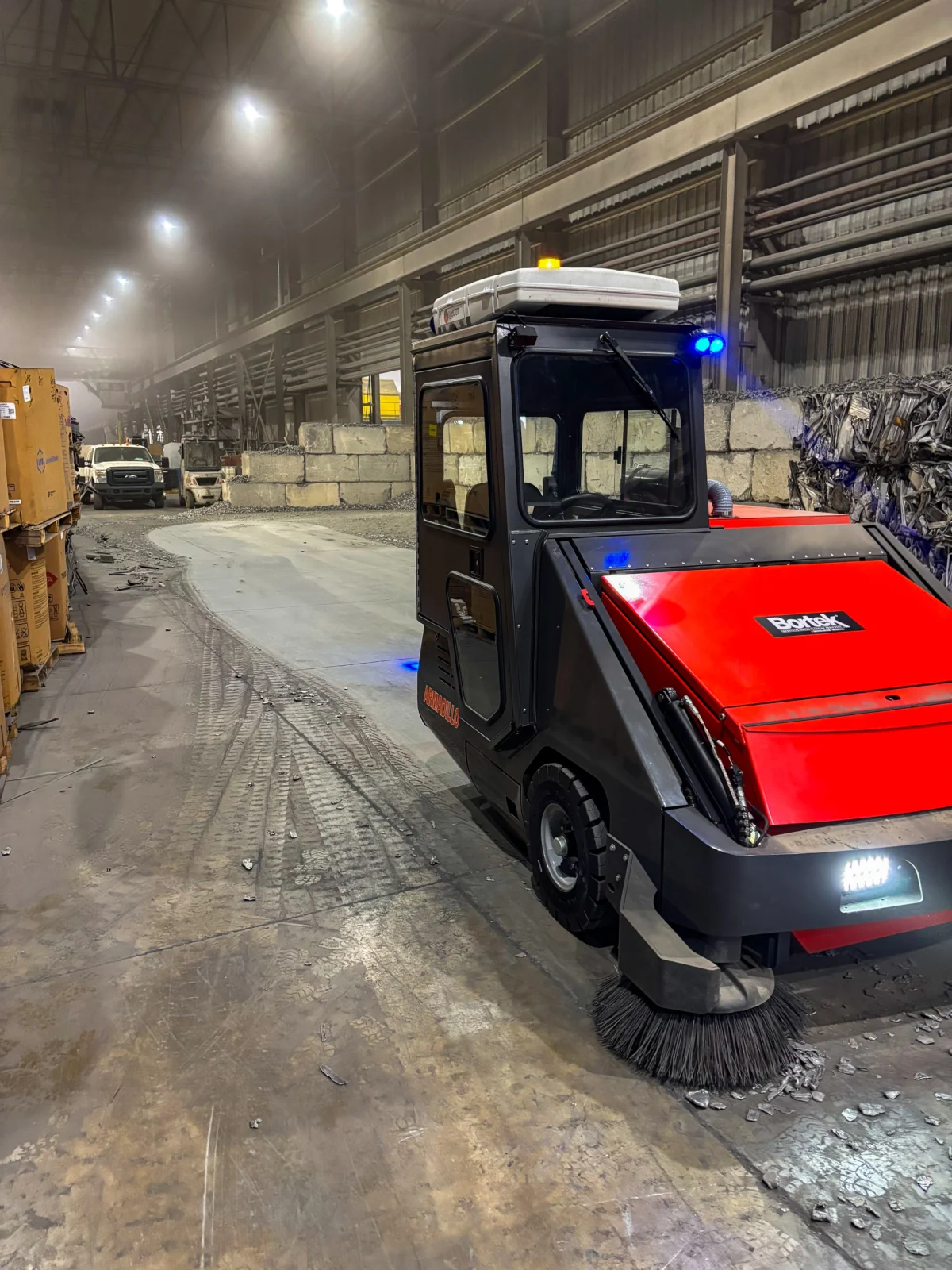
Walk into any aluminum smelting plant and you’ll see it before you even ask about it: metal shavings scattered across the aisles, fine dust settled on every surface, tire tracks cutting through debris that’s been there since the last shift. It’s a safety liability.
The Real Risk
Aluminum Dust Is Combustible
Fine aluminum dust becomes explosive when it’s suspended in the air at the right concentration. This isn’t a theoretical risk. One employee was killed and three others were severely burned at an Indiana plant that manufactures aluminum automotive wheels after a series of explosions fueled by aluminum dust. Aluminum fires also react violently with water, so the wet-cleaning shortcuts that work in other industries aren’t a safe option here.
Industry guidance from the Aluminum Association is direct about it: dust accumulations must not be allowed to build up on floors, piping, ductwork, or exposed structural members, and concentrations need to stay below the lower explosive limit at all times.
Why Shortcuts Don’t Work
Compressed Air Makes It Worse
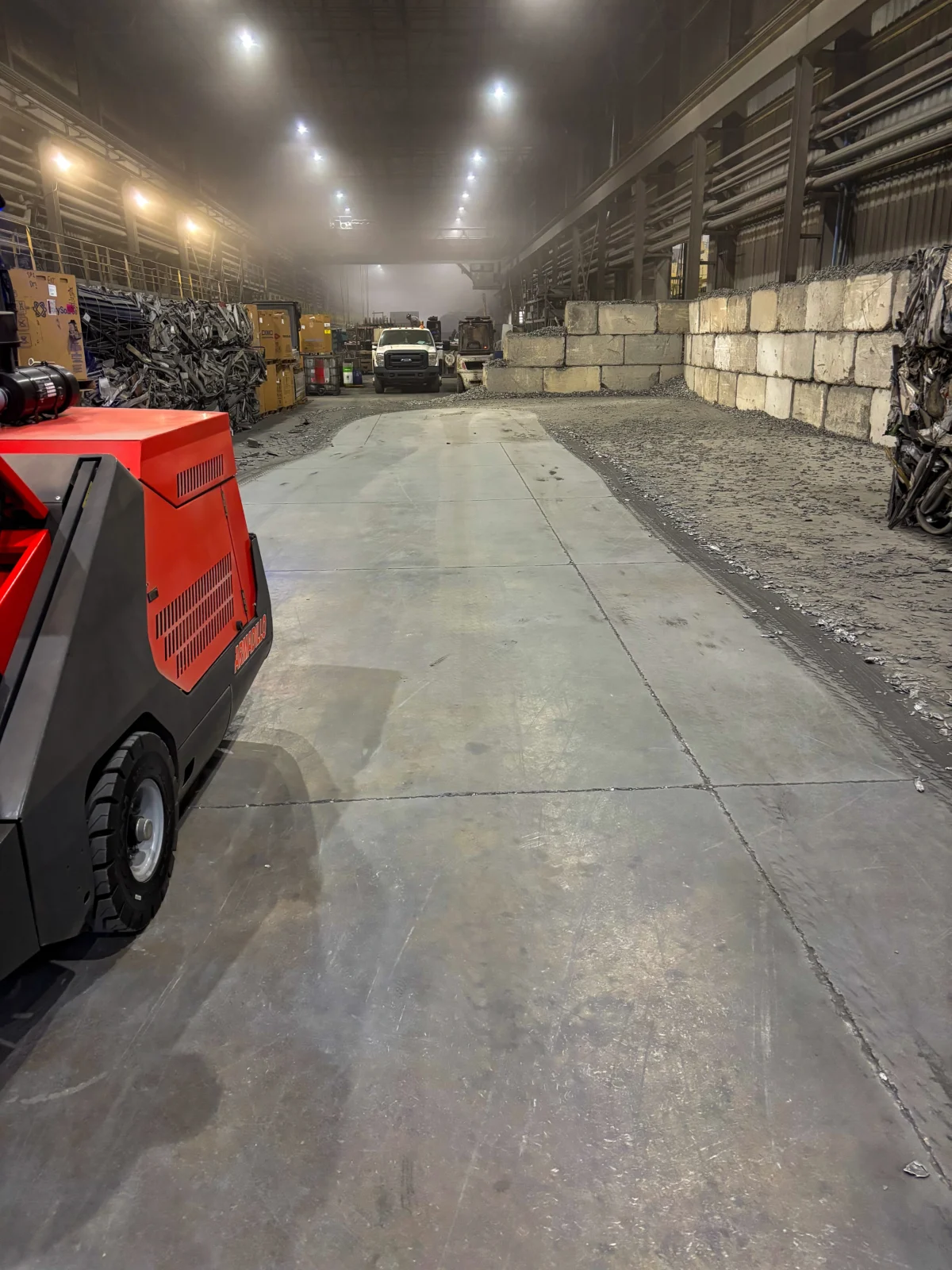
In a lot of industrial settings, blasting dust off a floor or beam with compressed air is standard practice. In an aluminum plant, it’s specifically warned against. Blowing settled material into the air doesn’t clean it up, it re-suspends it, turning a manageable pile of dust into an airborne explosion risk. Cleaning equipment that collects and contains dust instead of displacing it is the only method that actually reduces risk.
The Everyday Hazard
Shavings Mean Slips, Trips, and Falls
Metal grindings and shavings left on the floor are one of the leading causes of slip and fall incidents in industrial facilities, and they should be removed daily. In metalworking generally, reducing a 3,000-pound block down to a 300-pound finished part leaves 2,700 pounds of shavings that have to come off the floor fast. Multiply that across shifts and a facility can generate more debris in a day than a crew can keep up with by hand.
The Compliance Angle
OSHA Doesn’t Treat This as Optional
OSHA requires every working surface to be cleared of debris, solid and liquid, at the end of each shift or task, and recommends housekeeping be maintained continuously through the day rather than left until shift change. For a plant running continuous production, cleaning has to happen throughout the shift without pulling a person off the floor to do it by hand.
What This Looks Like in Practice
Built for This Kind of Environment
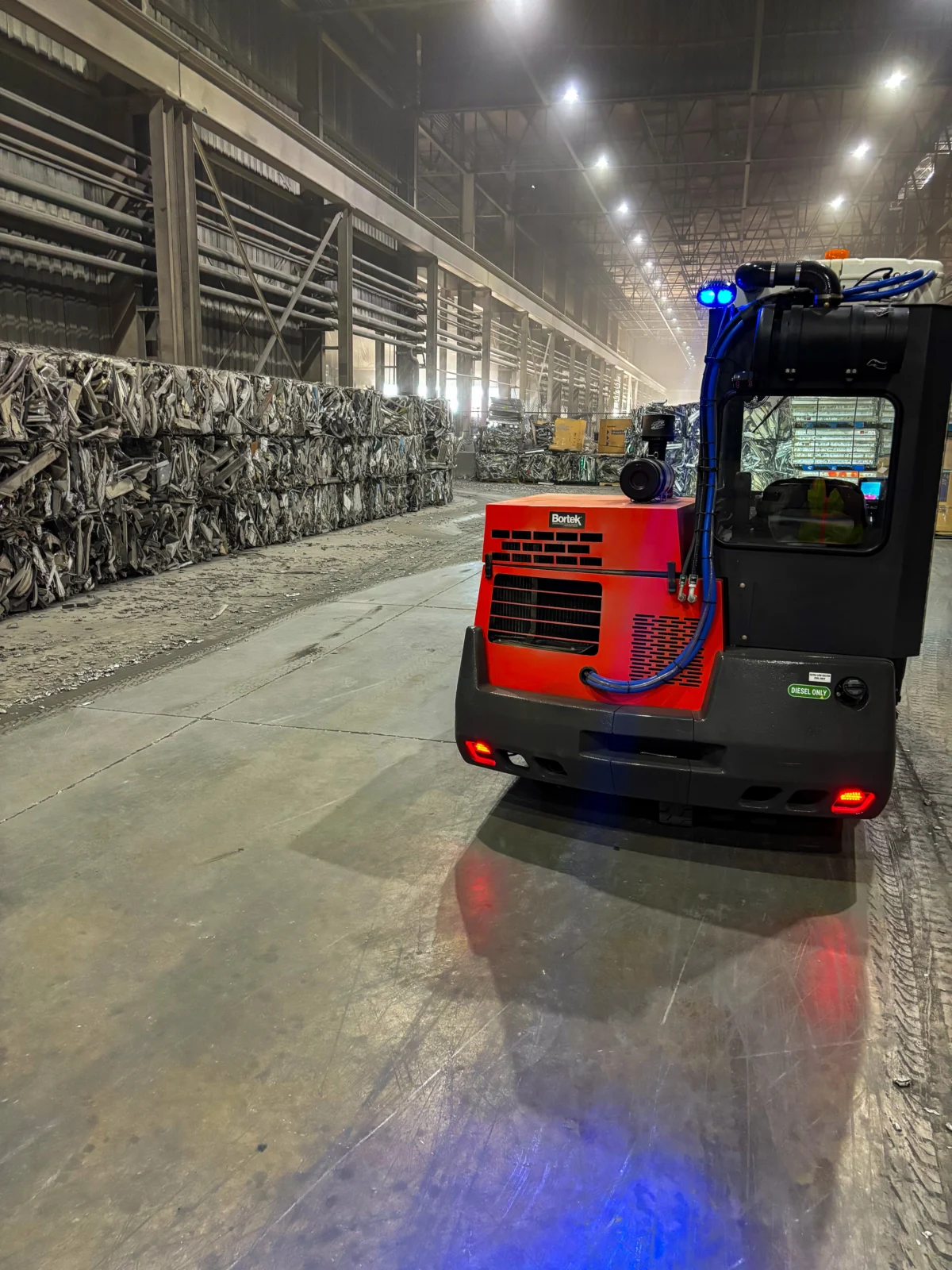
The PowerBoss Armadillo 10X is built for exactly this kind of demand. A 72″ cleaning path, expandable to 84″ with a dual side broom, covers ground fast. A 30 cubic foot high-dump hopper means fewer trips to empty it mid-shift. All-steel construction holds up to the heavy debris and rough conditions found in a smelting environment, and a MERV-17 filter helps manage fine dust rather than kicking it back into the air.
For a facility where dust control is a safety issue and not just an appearance issue, that combination matters.
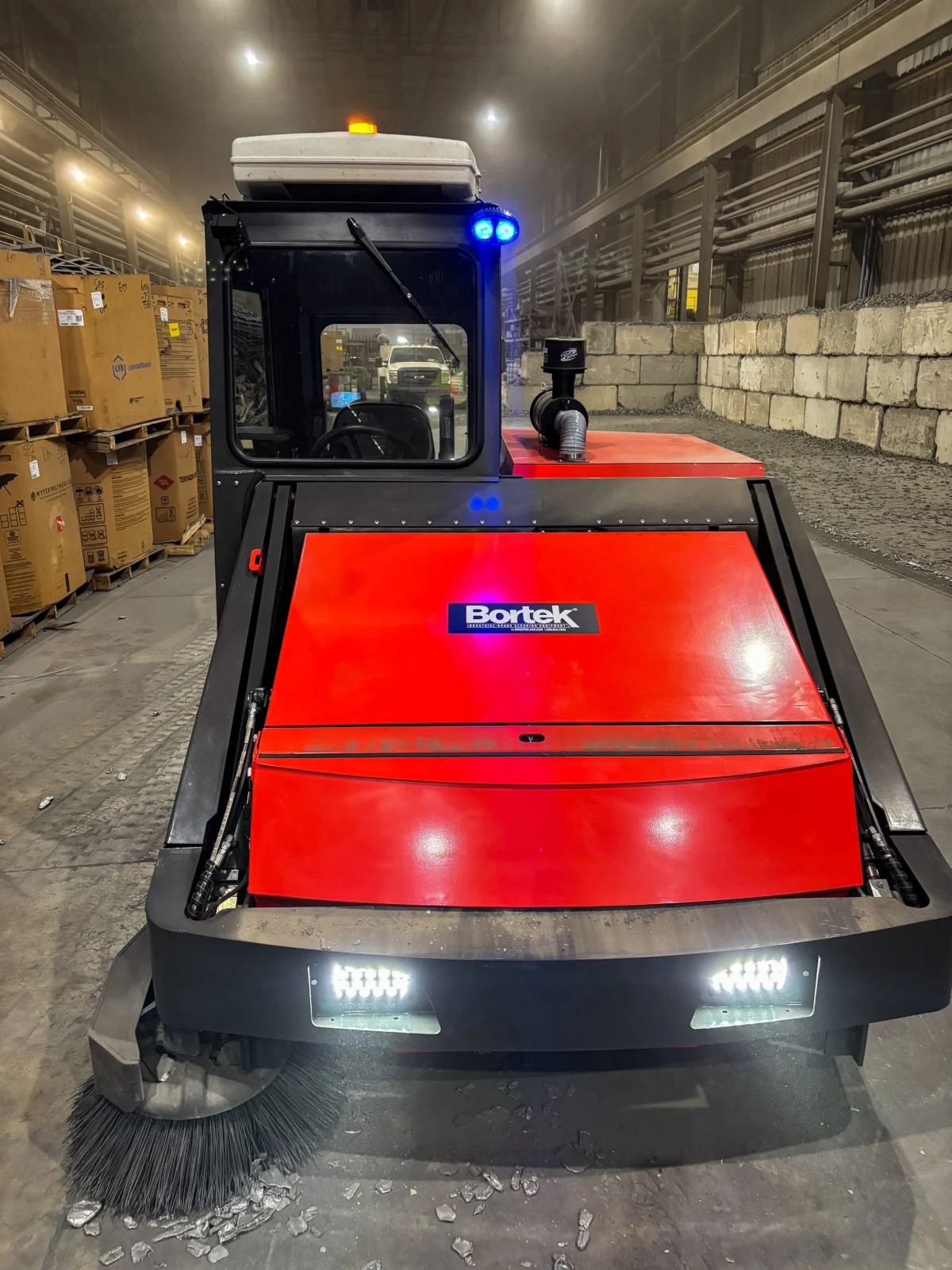
Have Debris Like This in Your Facility?
Talk to a Bortek equipment specialist about a sweeper built for your floor.